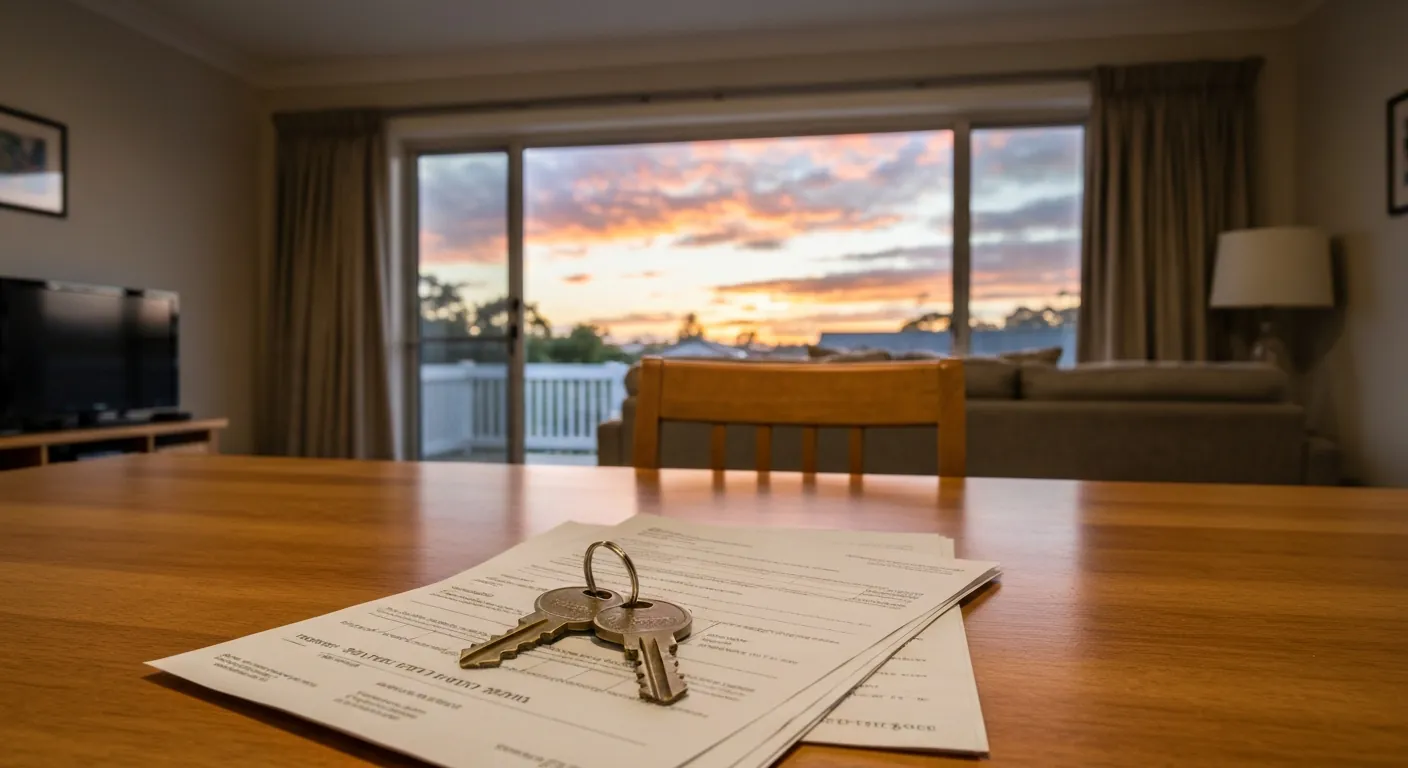
House keys resting on mortgage paperwork on a wooden desk, warm light, no.

Selling a Home

Cash Offers and Closing Costs in Tennessee (2026): What You Still Pay When There's No Loan

Browse Tennessee homes~10 minutes · soft credit check to start
  • Direct lender — not a call center
  • NMLS #192103
  • Equal Housing Lender
  • Soft credit check to start
Reviewed by Michael Hernandez, Loan Originator · NMLS #192103, on June 17, 2026
9 min readLast updated June 17, 2026Share
By Michael HernandezReviewed by Michael Hernandez, NMLS #192103Updated June 17, 20268 min readShare

Key takeaways

A cash offer in Tennessee erases the lender column of closing costs — no origination or underwriting fee, no lender-ordered appraisal, no credit or flood charge, no prepaid interest, and no Tennessee mortgage tax, because no deed of trust gets recorded. What it does not erase are the costs tied to the property itself: a title search and owner's title insurance, the state realty transfer tax ($0.37 per $100 of price), county recording fees, and the settlement-agent charge. Cash makes a closing faster and cheaper; it does not make it free. The bigger question for most people isn't the fee savings — it's whether the cash offer price actually nets you more than a financed one.

  • A cash offer removes every lender-driven cost plus Tennessee's mortgage tax ($0.115 per $100 borrowed, first $2,000 exempt) — because there's no loan recorded, that tax simply never gets charged.
  • It does not remove property-tied costs: a title search and owner's title insurance, the realty transfer tax ($0.37 per $100 of price), county recording fees, the settlement fee, and prorated taxes still hit the table.
  • Faster closings come from skipping the appraisal and underwriting — but a cash buyer should still order a title search and an inspection, because no lender is doing that diligence for them.
  • Many 'cash offers' from iBuyers, wholesalers, and investors land below market or carry a service fee deducted from proceeds — judge the net check, not the headline price.
  • If you're a buyer choosing between cash and financing, model both. A fully underwritten financed offer can close nearly as fast while keeping your cash liquid.

Closing costs that apply to a cash buyer vs. a financed buyer on the same Tennessee home

Closing costs that apply to a cash buyer vs. a financed buyer on the same Tennessee home
Closing costCash buyerFinanced buyer
Loan origination / underwriting feeNoYes
Lender-required appraisalNo (optional)Yes
Credit report & flood certificationNoYes
Prepaid interest & escrow fundingNoYes
TN mortgage tax ($0.115 / $100 borrowed, first $2,000 exempt)NoYes
TN realty transfer tax ($0.37 / $100 of price)YesYes
Title search & owner's title insuranceYesYes
Deed recording fee (county register of deeds)YesYes
Settlement / closing-agent feeYesYes
Prorated property taxes & HOA duesYesYes

Source: Tennessee Department of Revenue — Recordation Taxes (rates)

What a Cash Offer Actually Removes From Closing Costs

When a buyer pays cash, there is no mortgage — and that single fact deletes an entire column of closing costs that exist only because a lender is in the deal. There's no loan origination or underwriting fee, no lender-required appraisal, no credit-report or flood-certification charge, and no prepaid interest or escrow funding for the first year of taxes and insurance. In my day-to-day work as a Tennessee loan officer, that lender column is most of what shows up on the costs side of a borrower's estimate, so removing it is a real number, not a rounding error.

Tennessee adds one more savings that surprises people: the state mortgage tax. It's charged on the amount borrowed — $0.115 per $100 of indebtedness, with the first $2,000 exempt — and it applies only when a deed of trust (the instrument that secures the loan) gets recorded with the register of deeds. No loan recorded means no mortgage tax. On a $400,000 financed purchase, that's roughly $458 a cash buyer never pays.

What stays behind is everything that has nothing to do with a lender: transferring and insuring clean title, recording the new deed, and the closing agent's or attorney's charge for running the settlement. Those costs follow the property, not the financing — which is exactly why they don't disappear when the loan does.

The Closing Costs Cash Buyers Still Pay in Tennessee

The most common misread I hear is that a cash purchase is cost-free. It's cheaper, not free. Here's what a cash buyer in Tennessee typically still owes at the closing table:

  • Title search and owner's title insurance — you want clear, marketable title whether or not a lender demands it. With no lender, no one else is checking for liens, judgments, or boundary problems, so the owner's policy is your only backstop.
  • State realty transfer tax — $0.37 per $100 of the purchase price, owed on the deed itself regardless of how the buyer pays. In much of Tennessee, custom puts this on the buyer, but it's a contract term you can negotiate.
  • Recording fees — the county register of deeds charges a per-page fee plus a small state processing fee to record the new deed. The exact amount varies by county, but it's typically a modest two-figure cost.
  • Settlement / closing fee — the title company's or closing attorney's charge for conducting the closing, handling the escrow, and disbursing funds.
  • Inspection and survey — optional, but with no lender ordering an appraisal, there's no outside party looking at the home at all. An independent inspection is cheap insurance against a problem you'd otherwise inherit.
  • Prorated property taxes and HOA dues — at closing, the buyer reimburses the seller for the share of the year the buyer will own the property.

What a Cash Offer Changes for the Seller

For a seller, a cash offer shifts which risks vanish — but it barely touches your own costs. The headline benefit is certainty. There's no appraisal that can come in low and no loan that can collapse in underwriting at the eleventh hour. Those are the two reasons I most often see a Tennessee closing slip or fall apart in the final two weeks, so taking them off the board has genuine value.

Your closing costs as the seller, though, are largely unchanged by how the buyer pays. A Tennessee seller typically still owes any real estate commission (if an agent is involved), the cost of curative work to clear old liens or title defects, a prorated share of property taxes through the closing date, and whatever portion of the transfer tax or settlement fee the contract assigns to you. None of that gets cheaper because the buyer brought cash instead of a loan.

The line item to scrutinize is the offer price itself. Many cash offers — particularly from iBuyers, wholesalers, and investor buyers — are intentionally below market to leave room for a resale margin, and some deduct a 'service fee' straight from your proceeds. A slightly lower-looking financed offer can leave more money in your pocket. Run the net proceeds after every cost on each offer and compare those, not the top-line numbers.

Cash Buyer vs. Financed Buyer: The Closing-Cost Picture

The table below lines up which closing costs apply to a cash buyer versus a financed buyer on the same Tennessee home. The two Tennessee tax figures are published by the Tennessee Department of Revenue and apply statewide; note that only the mortgage tax is tied to financing, while the realty transfer tax is owed either way.

Should You Pay Cash or Finance? Run Both

Lower closing costs and a faster close are real advantages of paying cash, but they're not the whole decision — and as a lender, I'll be the first to tell a buyer when cash is the right call. Paying cash converts liquid savings into equity you can't easily get back to, and it gives up the leverage that financing provides. A buyer who finances keeps cash on hand for repairs, reserves, and other goals, and can still move fast with a strong, fully underwritten approval in hand.

There's a middle path a lot of Tennessee buyers use: make a competitive offer backed by financing that's already cleared underwriting, so it carries close to the speed and certainty of cash without draining the bank account. And buyers who do pay all cash aren't locked in forever — a delayed-financing or cash-out refinance can pull money back out later, subject to equity, credit, and debt-to-income limits. That's a program option, not an automatic outcome; you'd still have to qualify.

The honest answer is that it depends on your numbers, your reserves, and what else that money could do for you. Before committing a six-figure sum to a single asset, it's worth modeling both paths side by side. If you want a financed comparison run against a specific Tennessee home, you can start a quick pre-qual and we'll put the two scenarios next to each other — no number here is a commitment, just a way to see the real trade-off.

Frequently asked questions

Do cash buyers pay closing costs in Tennessee?

Yes — just fewer of them. A cash buyer skips every lender fee and the Tennessee mortgage tax, but still pays for a title search and owner's title insurance, the state realty transfer tax ($0.37 per $100 of price), county recording fees, the settlement fee, and prorated property taxes. It's cheaper than financing, not free.

How much does paying cash save on closing costs?

It typically saves the entire lender column — origination and underwriting, the appraisal, credit and flood fees, prepaid interest, and escrow funding — plus Tennessee's mortgage tax of $0.115 per $100 borrowed (the first $2,000 of debt is exempt). On a mid-priced Tennessee home, that adds up to several thousand dollars in costs a cash buyer never incurs.

Do I need title insurance if I pay cash for a Tennessee home?

It isn't legally required when there's no lender, but it's strongly recommended. With cash, no lender is running a title check for liens, easements, or ownership gaps, so an owner's title policy is the only thing protecting you if a title defect surfaces after closing. It's a one-time premium for lasting coverage.

Who pays the realty transfer tax on a cash sale in Tennessee?

Tennessee's realty transfer tax of $0.37 per $100 of the purchase price is owed on the deed no matter how the buyer pays. By common practice the buyer usually covers it, but who actually pays it is a negotiable term in the purchase contract.

Is a cash offer always the right move for a seller?

Not always. A cash offer removes appraisal and financing risk and tends to close faster, but these offers often come in below market, and some carry a service fee deducted from your proceeds. Compare the net proceeds after all costs on each offer — a financed offer at a higher price sometimes leaves you with more money.

Can someone who buys with cash get a mortgage later?

Yes. A cash buyer can pursue delayed financing or a later cash-out refinance to recover some of the funds they put in, subject to equity, credit, and debt-to-income rules. It's a program, not a guaranteed approval — qualification still applies — but it does mean paying cash isn't a permanent commitment of those funds.

Related

Keep reading — more on this from Pacific Bay Lending.

Reviewed by Michael Hernandez, Loan Originator · NMLS #192103

Michael Hernandez is a licensed mortgage loan originator with Pacific Bay Lending (Pacific Bay Lending Corp, NMLS #192103), a direct lender serving Tennessee. This guide is general education — not financial advice, a rate offer, or a commitment to lend. Your situation is reviewed individually when you get pre-qualified.

See your real numbers

Get pre-qualified in about 10 minutes — a soft credit check to start, no impact to your score, and no obligation.

Michael Hernandez, Branch Manager · Pacific Bay Lending Corp NMLS #192103 · Equal Housing Lender. Homes shown are public listings for illustration of what's available in this range — not an offer to make a loan on, or sell, a specific property. This is not a commitment to lend; all loans subject to credit approval, program guidelines, and underwriting.

Browse Tennessee homes →