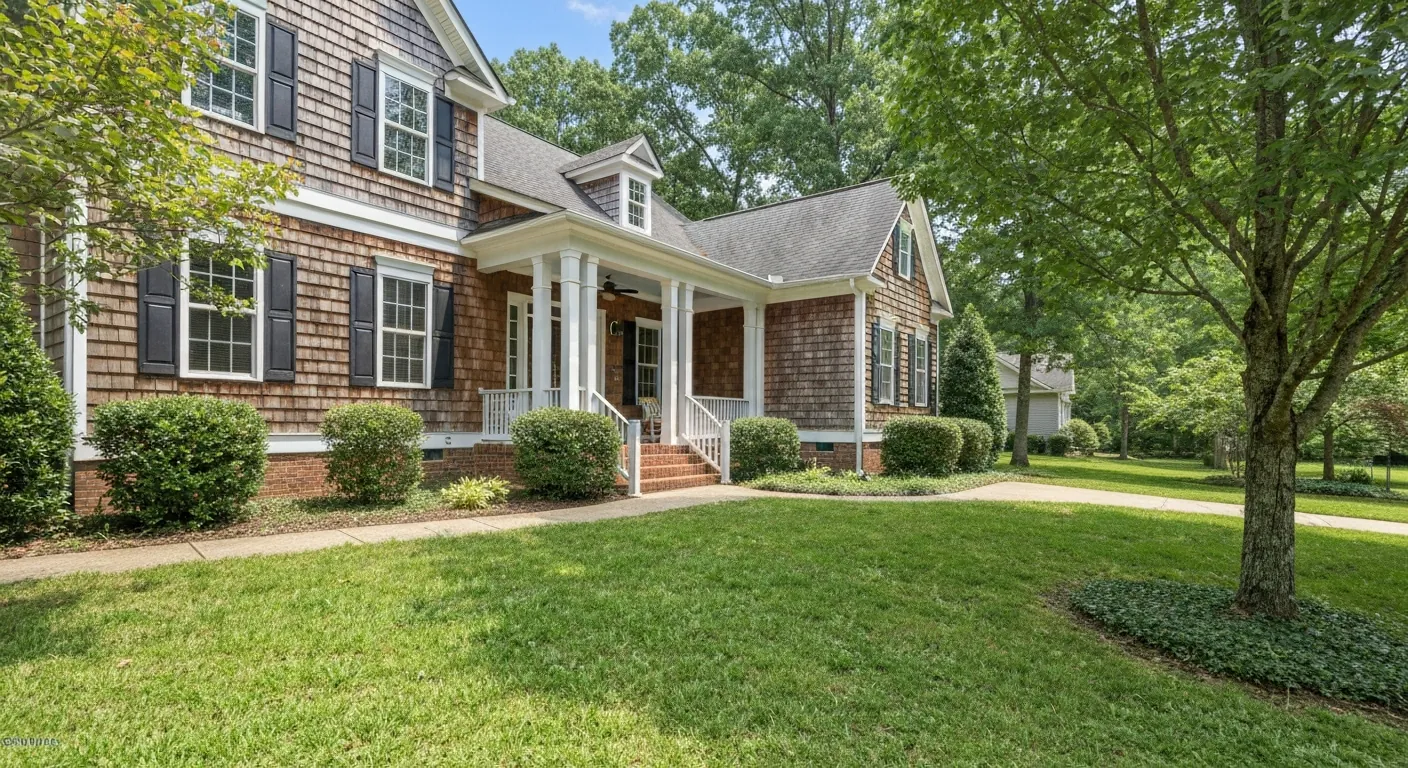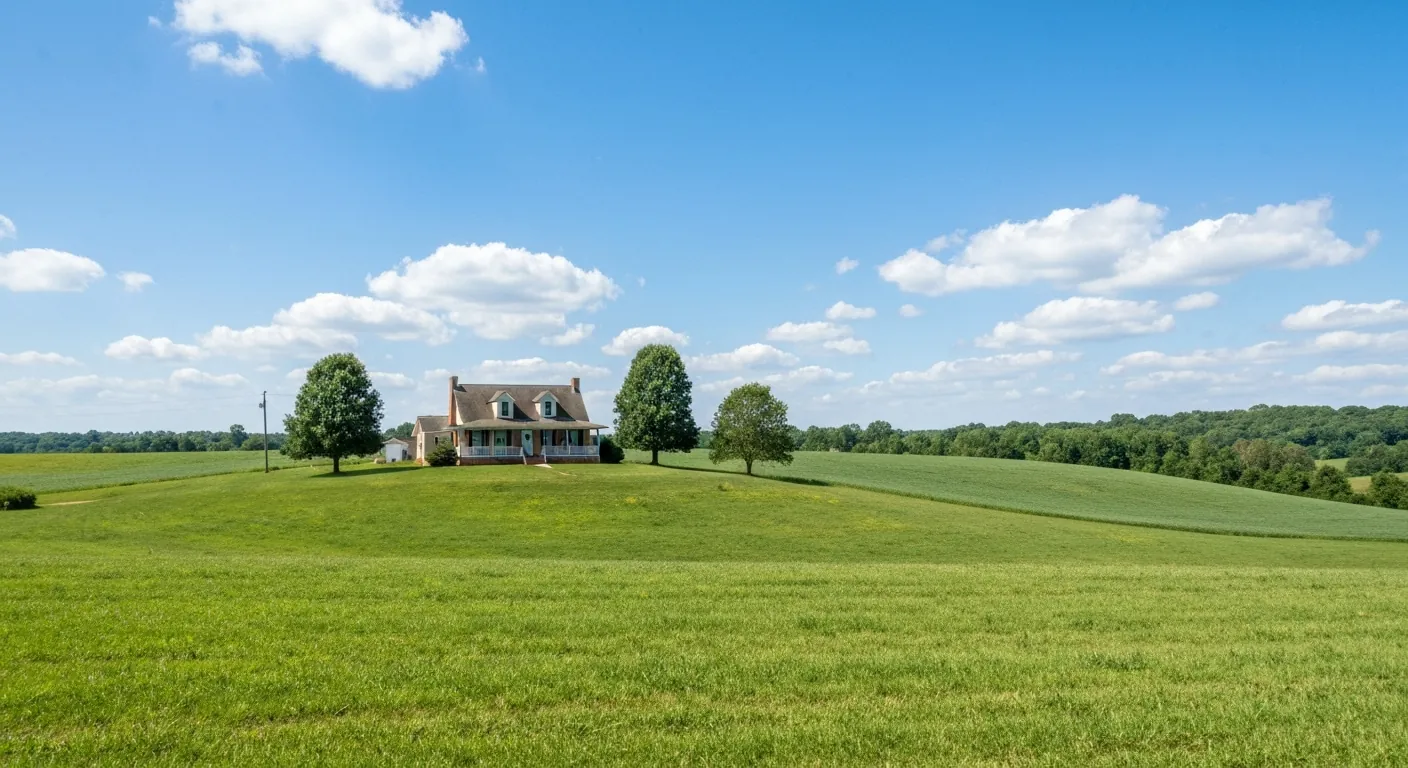
A rural Tennessee farmhouse with open green land and a clear sky.

Loan programs · USDA

USDA Loans in Tennessee: Zero-Down Rural Financing

Much of Tennessee outside the major metros qualifies for USDA financing — a zero-down loan most buyers have never heard of. Here's how the rural-area test, income limits, and guarantee fees actually work, from a licensed loan officer.

See which program fits~10 minutes · soft credit check to start
  • Direct lender — not a call center
  • NMLS #192103
  • Equal Housing Lender
  • Soft credit check to start
Reviewed by Michael Hernandez, Loan Originator · NMLS #192103, on June 17, 2026
5 min readLast updated June 17, 2026Share

Key takeaways

A USDA loan is a mortgage guaranteed by the U.S. Department of Agriculture's Rural Development program. For homes in USDA-eligible areas and households within the income limit, it offers zero-down financing. Eligibility turns on two factual tests: the property's location and your household income (generally up to 115% of the area median). USDA loans carry an upfront and an annual guarantee fee.

USDA Guaranteed loan — the two eligibility tests and the fees

USDA Guaranteed loan — the two eligibility tests and the fees
FactorHow it works
Property locationThe home must be in a USDA-eligible area, checked by address on the USDA eligibility map.
Household incomeTotal household income generally must be at or below 115% of the area median income (AMI) for the county.
Down payment0% — USDA Guaranteed loans can finance the full purchase price for qualified buyers.
Upfront guarantee fee1.00% of the loan amount (can be financed into the loan).
Annual fee0.35% of the remaining balance, paid monthly.

Source: USDA Rural Development — Single Family Housing Guaranteed Loan Program

What a USDA loan is

A USDA loan is a mortgage backed by the U.S. Department of Agriculture through its Rural Development program. As with FHA and VA, the government doesn't hand you the money — an approved lender like Pacific Bay Lending originates the loan, and the USDA guarantee reduces the lender's risk. That backstop is what allows the program's headline feature: 0% down for qualified buyers.

The program exists to support homeownership outside dense urban cores, and a surprising amount of Tennessee qualifies — not just farmland, but many smaller towns and the edges of metro areas.

Test 1 — the property has to be in a USDA-eligible area

USDA eligibility is tied to the home's location, and you check it by address on the USDA eligibility map. The boundaries are broader than most people expect: large portions of Tennessee outside Nashville, Memphis, Knoxville, and Chattanooga proper fall inside an eligible area, including many bedroom communities a normal commute from a metro.

Because the maps are reviewed periodically and the lines can be specific down to a street, we confirm eligibility for the exact address you're considering rather than guessing from a county name.

Test 2 — household income within the limit

USDA caps the total household income that can use the Guaranteed program. The limit is generally 115% of the area median income (AMI) for the county, and it counts the income of the adults in the household, not just the borrowers on the loan. Because it scales with household size and is updated periodically, the real test is your numbers against the current county figure.

The income limit is a published program parameter — a ceiling, not a floor — and it's the piece that most often surprises buyers, in both directions. We pull the current limit for your county and compare it to your actual household income when you pre-qualify.

Zero down and the guarantee fees

For a qualified borrower, a USDA Guaranteed loan can finance the full purchase price — so, like VA, it removes the down payment that keeps many buyers renting. In exchange, the program charges two fees that fund the guarantee: a one-time upfront guarantee fee (which can be financed into the loan) and a smaller annual fee paid monthly as part of your payment. The current published percentages are in the table above.

The annual fee is generally lower than FHA's annual MIP, which is part of why USDA can be an attractive option for eligible buyers who don't have a down payment saved.

Who USDA tends to fit

USDA is built for a primary residence you'll live in — not an investment property or a second home. It tends to fit buyers who are looking outside the metro core, who don't have a large down payment saved, and whose household income lands within the county limit. It pairs a true zero-down structure with a modest monthly fee, which can make it the lowest-cash-to-close path for the right buyer.

The honest first step is to check the two tests against a specific home and your real income. We run both at no cost and compare USDA against FHA, VA, and conventional so you see the full picture before you write an offer.
Frequently asked questions

What counts as a USDA-eligible 'rural' area?

USDA eligibility is defined by the home's location on the USDA eligibility map, and the areas are broader than the word 'rural' suggests — many small Tennessee towns and the outskirts of metro areas qualify, not just farmland. The only reliable way to know is to check the specific property address, which we do for you during pre-qualification.

What is the USDA income limit?

For the USDA Guaranteed program, total household income generally must be at or below 115% of the area median income (AMI) for the county, and it counts the adults in the household — not only the borrowers on the loan. The figure scales with household size and is updated periodically, so we compare the current county limit to your actual income.

Can I really buy with no down payment on a USDA loan?

Yes — a USDA Guaranteed loan can finance the full purchase price for a qualified borrower, so it requires no down payment on a primary residence. You still need to qualify on credit and income, the home must be in a USDA-eligible area, and the loan carries an upfront and an annual guarantee fee.

What are the USDA guarantee fees?

USDA loans carry a one-time upfront guarantee fee of 1.00% of the loan amount, which can be financed into the loan, plus an annual fee of 0.35% of the remaining balance paid monthly. These fees fund the program's guarantee and replace the monthly mortgage insurance you'd see on other low-down-payment loans.

Is USDA only for first-time buyers?

No. USDA does not require you to be a first-time buyer. The program's tests are about the property's location, your household income, and that the home will be your primary residence — not whether you've owned before. As long as you meet those criteria and qualify on credit and income, repeat buyers can use it too.

Can I use a USDA loan for an investment property or vacation home?

No. USDA Guaranteed loans are for a primary residence you'll live in. Investment properties and second or vacation homes don't qualify. If your goal is a non-owner-occupied property, we'll point you to a conventional investment-property loan instead and walk through what that requires.

Part of our Loan Programs guide.

Related guides

Reviewed by Michael Hernandez, Loan Originator · NMLS #192103

Michael Hernandez is a licensed mortgage loan originator with Pacific Bay Lending (Pacific Bay Lending Corp, NMLS #192103), a direct lender serving Tennessee. This guide is general education — not financial advice, a rate offer, or a commitment to lend. Your situation is reviewed individually when you get pre-qualified.

See your real numbers

Get pre-qualified in about 10 minutes — a soft credit check to start, no impact to your score, and no obligation.

Estimate only — not a rate offer, APR disclosure, or commitment to lend. Subject to credit approval and underwriting.

Michael Hernandez, Branch Manager · Pacific Bay Lending Corp NMLS #192103 · Equal Housing Lender. Homes shown are public listings for illustration of what's available in this range — not an offer to make a loan on, or sell, a specific property. This is not a commitment to lend; all loans subject to credit approval, program guidelines, and underwriting.

See which program fits →