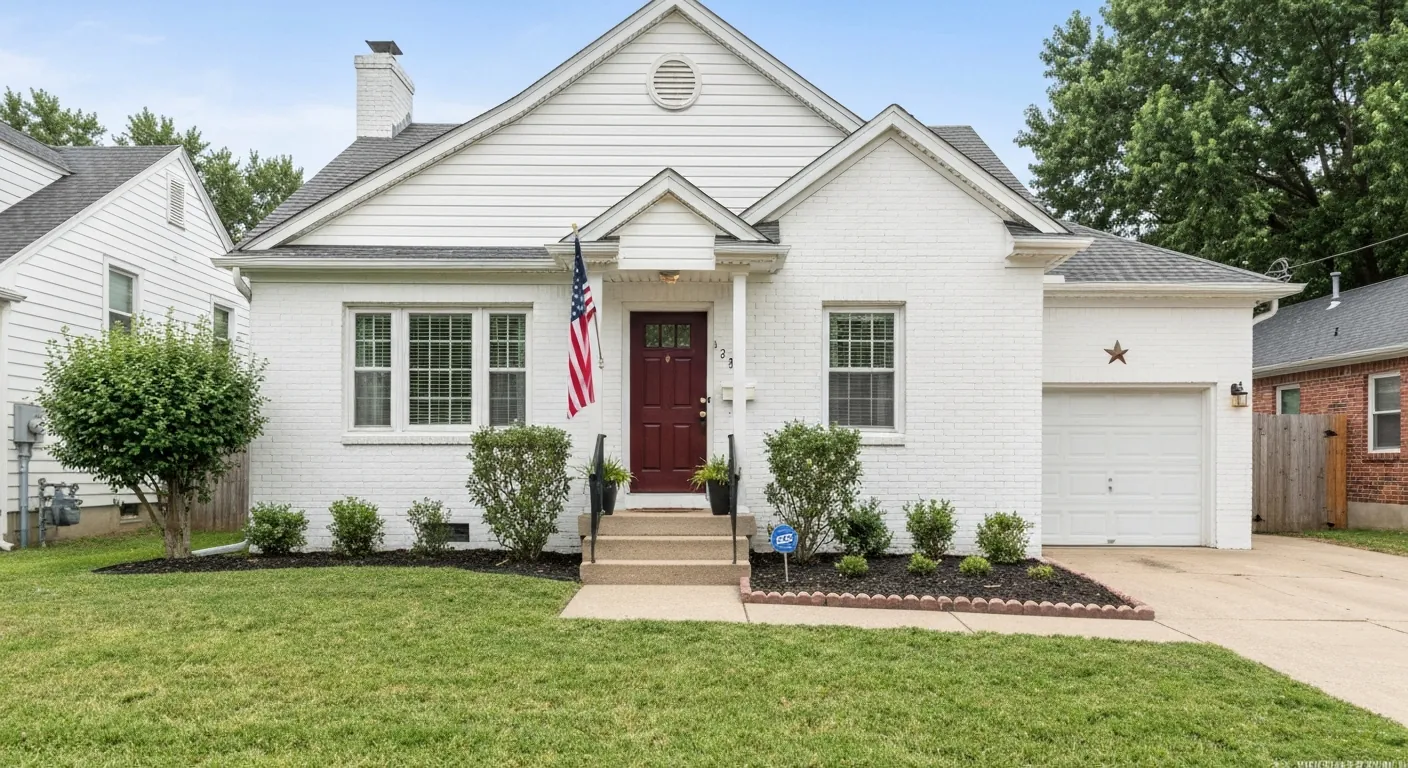
A tidy single- home with an American flag mounted by the front door, no.

Loan programs · VA

The VA Funding Fee: How It Works, the Tiers & Who's Exempt

VA loans charge a one-time funding fee instead of monthly mortgage insurance. Here is what it is, how the tiers work, how to roll it into the loan, and who pays nothing at all — from a licensed loan officer.

See which program fits~10 minutes · soft credit check to start
  • Direct lender — not a call center
  • NMLS #192103
  • Equal Housing Lender
  • Soft credit check to start
Reviewed by Michael Hernandez, Loan Originator · NMLS #192103, on June 17, 2026
5 min readLast updated June 17, 2026Share

Key takeaways

The VA funding fee is a one-time charge that helps keep the VA loan program self-sustaining for future borrowers. It takes the place of the monthly mortgage insurance other low-down-payment loans charge. The fee is a percentage of the loan amount, set by your down payment and whether it's your first use of the benefit, and it can usually be financed into the loan instead of paid in cash. Veterans receiving compensation for a service-connected disability and certain surviving spouses are exempt entirely.

VA funding fee — current published schedule (percentage of the loan amount)

VA funding fee — current published schedule (percentage of the loan amount)
Loan typeFirst useSubsequent use
Purchase or construction — less than 5% down2.15%3.30%
Purchase or construction — 5% to 9.99% down1.50%1.50%
Purchase or construction — 10% or more down1.25%1.25%
Cash-out refinance2.15%3.30%
Interest Rate Reduction Refinance Loan (IRRRL)0.50%0.50%

Source: U.S. Department of Veterans Affairs — VA funding fee and closing costs

What the funding fee is — and why it exists

Because a VA loan requires no down payment and carries no monthly mortgage insurance, the program needs some way to cover its own costs without burdening taxpayers. That is the job of the funding fee: a one-time charge that goes back into the VA loan program so it can keep serving the next generation of veterans. Think of it as the trade for the two biggest benefits — zero down and no monthly insurance.

It is charged once, at closing, on most VA purchase and refinance loans. It is not an ongoing cost like FHA's annual MIP or conventional PMI, which is part of why a VA payment often comes in lower than a comparable low-down-payment loan on another program.

How the tiers work: first use, down payment, and refinances

Two things set your fee on a purchase: whether it is your first use of the VA benefit, and how much you put down. Putting some money down actually lowers the fee — 5% down drops it, and 10% or more lowers it further, as the schedule above shows. The fee is higher on a subsequent use when you put less than 5% down.

Refinances have their own rates. A cash-out refinance uses the same first-use and subsequent-use structure as a low-down-payment purchase, while the streamline Interest Rate Reduction Refinance Loan (IRRRL) carries a much smaller fee. Always confirm the current figures against the VA's published schedule, linked above, since the VA sets them.

Financing the fee into the loan

You do not have to bring the funding fee to closing in cash. In most cases it can be rolled into the loan amount and paid over the life of the loan along with the rest of your balance. That keeps your out-of-pocket cash at closing lower, at the cost of financing a slightly larger balance.

As a rough illustration only: on a $300,000 VA purchase with no down payment at first use, a 2.15% funding fee is about $6,450. Rolled into the loan, that is added to the balance rather than paid in cash up front. This is an illustrative figure, not a quote — your real fee depends on your loan amount, down payment, use, and any exemption, which we confirm before quoting costs.

For local context, the median list price across the 16,101 active homes in our Tennessee listings is $499,000 — a live housing-supply figure, not an appraisal or a statement of what you qualify for.

Who is exempt from the funding fee

A significant number of borrowers pay no funding fee at all. You are generally exempt if you are:

  • A veteran receiving (or eligible to receive) VA compensation for a service-connected disability;
  • A veteran who would be entitled to that compensation but is receiving retirement or active-duty pay instead;
  • A surviving spouse of a veteran who died in service or from a service-connected disability;
  • A service member with a proposed or memorandum rating, before loan closing, of eligibility for compensation based on a pre-discharge claim, or who received a Purple Heart (per the VA's current rules).

Your funding-fee status usually shows on your Certificate of Eligibility. We confirm whether an exemption applies to you so you never pay a fee you do not owe — and if you already paid one you were exempt from, you may be entitled to a refund.
Frequently asked questions

Can I roll the VA funding fee into my loan?

Usually, yes. The funding fee can typically be financed into the loan amount rather than paid in cash at closing, so it's added to your balance and paid over time. Many VA buyers do exactly this to keep their cash-to-close lower.

Who is exempt from the VA funding fee?

Veterans receiving (or eligible to receive) compensation for a service-connected disability are generally exempt, along with certain surviving spouses and some Purple Heart recipients. The exemption is usually noted on your Certificate of Eligibility. We confirm whether it applies before quoting your costs.

Does a down payment lower the VA funding fee?

Yes. On a purchase, putting at least 5% down lowers the funding fee, and 10% or more lowers it further. The published schedule shows the exact percentages by down-payment tier and by whether it's your first or a subsequent use of the benefit.

Is the funding fee the same as mortgage insurance?

No. The funding fee is a one-time charge, while mortgage insurance — FHA's annual MIP or conventional PMI — is an ongoing monthly cost. A VA loan has no monthly mortgage insurance at all, which is part of why its payment is often lower than a comparable low-down-payment loan on another program.

Can I get a refund if I paid the fee but was exempt?

Potentially. If you paid a funding fee and were entitled to an exemption — for example, a disability compensation award that was effective before your loan closed — you may be able to recover it. We can help you look into a refund if your situation suggests you were exempt.

Part of our Loan Programs guide.

Related guides

Reviewed by Michael Hernandez, Loan Originator · NMLS #192103

Michael Hernandez is a licensed mortgage loan originator with Pacific Bay Lending (Pacific Bay Lending Corp, NMLS #192103), a direct lender serving Tennessee. This guide is general education — not financial advice, a rate offer, or a commitment to lend. Your situation is reviewed individually when you get pre-qualified.

See your real numbers

Get pre-qualified in about 10 minutes — a soft credit check to start, no impact to your score, and no obligation.

Estimate only — not a rate offer, APR disclosure, or commitment to lend. Subject to credit approval and underwriting.

Michael Hernandez, Branch Manager · Pacific Bay Lending Corp NMLS #192103 · Equal Housing Lender. Homes shown are public listings for illustration of what's available in this range — not an offer to make a loan on, or sell, a specific property. This is not a commitment to lend; all loans subject to credit approval, program guidelines, and underwriting.

See which program fits →