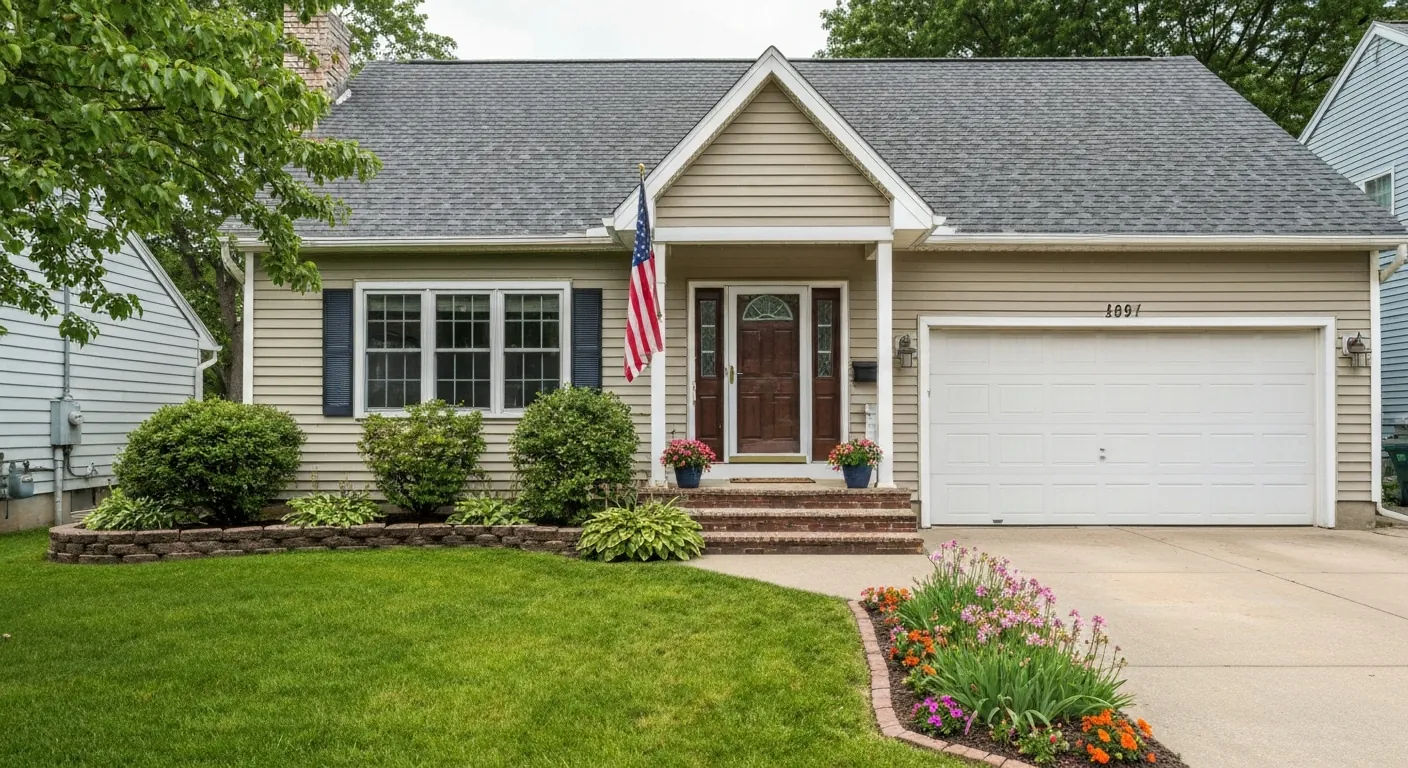
A tidy single- home with an American flag mounted by the front door, no.

Loan programs · VA

Which Properties a VA Loan Can Buy (and the Property Requirements)

A VA loan can buy more kinds of homes than people expect — and a few it can't. Here are the eligible property types, the occupancy rule, and the condition standards a home has to meet, from a licensed loan officer.

See which program fits~10 minutes · soft credit check to start
  • Direct lender — not a call center
  • NMLS #192103
  • Equal Housing Lender
  • Soft credit check to start
Reviewed by Michael Hernandez, Loan Originator · NMLS #192103, on June 17, 2026
5 min readLast updated June 17, 2026Share

Key takeaways

A VA loan can finance most homes you'd live in as your primary residence: a single-family house, a VA-approved condominium, a multi-unit property where you occupy one unit, new construction, and many manufactured homes on a permanent foundation. What it won't finance is a pure investment property or vacation home, because VA loans require you to occupy the home. Whatever the type, the home must also meet the VA's Minimum Property Requirements — basic safety, soundness, and sanitation standards confirmed by the VA appraisal.

Property types and VA financing eligibility

Property types and VA financing eligibility
Property typeVA financing
Single-family home (one unit)Eligible as a primary residence.
Multi-unit property (2 to 4 units)Eligible if you occupy one of the units as your primary residence.
CondominiumEligible if the project is on the VA-approved condo list (or can be approved).
Manufactured or modular homeEligible with conditions — generally a permanent foundation plus VA and lender requirements.
New constructionEligible; VA builder, inspection, and warranty requirements apply.
Investment property or vacation / second homeNot eligible — VA loans require occupancy.
Cooperative (co-op) unitGenerally not eligible for VA financing.
Mixed-use or commercial propertyNot eligible unless it is predominantly residential and meets VA limits.

Source: U.S. Department of Veterans Affairs — VA-backed home loan eligibility & VA Lenders Handbook (VA Pamphlet 26-7)

The homes a VA loan will finance

The VA benefit is more flexible on property type than many buyers assume. A standard single-family home is the most common, but you can also use it on a VA-approved condominium, a multi-unit property of two to four units (as long as you live in one of them), new construction, and many manufactured or modular homes set on a permanent foundation. The common thread is that the home is somewhere you intend to live, not a rental you buy purely to lease out.

Condos have one extra wrinkle: the project itself has to be on the VA-approved list (or get approved), because the VA is evaluating the whole development, not just your unit. We check that early so it does not surprise you late in the process.

The occupancy rule — and what it rules out

A VA loan is for a home you will occupy as your primary residence, generally within a reasonable time after closing. That single rule is what makes a pure investment property or a vacation / second home ineligible for VA financing. Co-ops are generally not eligible either, and a property has to be primarily residential — a largely commercial or mixed-use building does not qualify.

The occupancy rule still leaves useful room. Buying a two-to-four-unit property and living in one unit is allowed, and the rent from the other units can sometimes help you qualify. We confirm whether a specific plan fits the VA's occupancy guidelines before you write an offer.

Minimum Property Requirements (MPRs)

Beyond the type of home, the VA wants the property itself to be safe and sound. The Minimum Property Requirements are the condition standards a home must meet, confirmed by the VA appraisal. In broad strokes, the home should be:

  • Safe, structurally sound, and sanitary — a marketable, livable residence;
  • Served by safe drinking water and a proper sewage/septic system;
  • Equipped with working mechanical, heating, and electrical systems and adequate, permanent heating;
  • Protected by a roof and exterior in sound condition, with no readily observed evidence of significant defects, hazards, or active wood-destroying insects;
  • Reachable by a continuous all-weather access road and free of conditions that threaten the safety of the occupants.

MPRs protect you — they exist so the VA benefit does not put you into a home with hidden safety problems. An MPR issue can sometimes be repaired before closing so the deal still works. Note that the VA appraisal is about safety and value, not the detailed component-by-component review a separate home inspection gives you — the two reports do different jobs.

What this looks like in the Tennessee market

Most of what is for sale here fits comfortably inside VA-eligible property types. Across the 16,101 active homes in our Tennessee listings, the median list price is $499,000 and the typical home is about 2,125 square feet. Those are live housing-supply figures, not an appraisal of any home or a statement of what you qualify for — the MPR review happens on the specific property once you are under contract.
Frequently asked questions

Can I buy an investment property with a VA loan?

Not as a pure rental. VA loans require you to occupy the home as your primary residence, so a property bought solely to lease out doesn't qualify. The one path that works is a two-to-four-unit property where you live in one unit — that's allowed, and the other units' rent can sometimes help you qualify.

Can a VA loan buy a condo?

Yes, if the condominium project is on the VA-approved list — or can be approved. The VA evaluates the whole development, not just your unit, so we check the project's status early. Many established condo projects are already approved.

What are VA Minimum Property Requirements (MPRs)?

MPRs are the VA's condition standards a home must meet to be financed: it must be safe, structurally sound, and sanitary, with working systems, safe water, adequate heating, a sound roof, and all-weather access. The VA appraiser confirms them. They protect you from buying a home with hidden safety problems.

Can I use a VA loan to buy a manufactured home?

Often, yes, with conditions. A manufactured or modular home generally needs to be on a permanent foundation and meet VA and lender requirements. The rules are more involved than for a site-built house, so we confirm eligibility on the specific home before you go under contract.

Is the VA appraisal the same as a home inspection?

No. The VA appraisal checks value and confirms the home meets Minimum Property Requirements — it's a safety-and-value review, not a detailed component-by-component inspection. A separate home inspection digs into the condition of the roof, systems, and structure. They do different jobs, and most buyers get both.

Part of our Loan Programs guide.

Related guides

Reviewed by Michael Hernandez, Loan Originator · NMLS #192103

Michael Hernandez is a licensed mortgage loan originator with Pacific Bay Lending (Pacific Bay Lending Corp, NMLS #192103), a direct lender serving Tennessee. This guide is general education — not financial advice, a rate offer, or a commitment to lend. Your situation is reviewed individually when you get pre-qualified.

See your real numbers

Get pre-qualified in about 10 minutes — a soft credit check to start, no impact to your score, and no obligation.

Estimate only — not a rate offer, APR disclosure, or commitment to lend. Subject to credit approval and underwriting.

Michael Hernandez, Branch Manager · Pacific Bay Lending Corp NMLS #192103 · Equal Housing Lender. Homes shown are public listings for illustration of what's available in this range — not an offer to make a loan on, or sell, a specific property. This is not a commitment to lend; all loans subject to credit approval, program guidelines, and underwriting.

See which program fits →