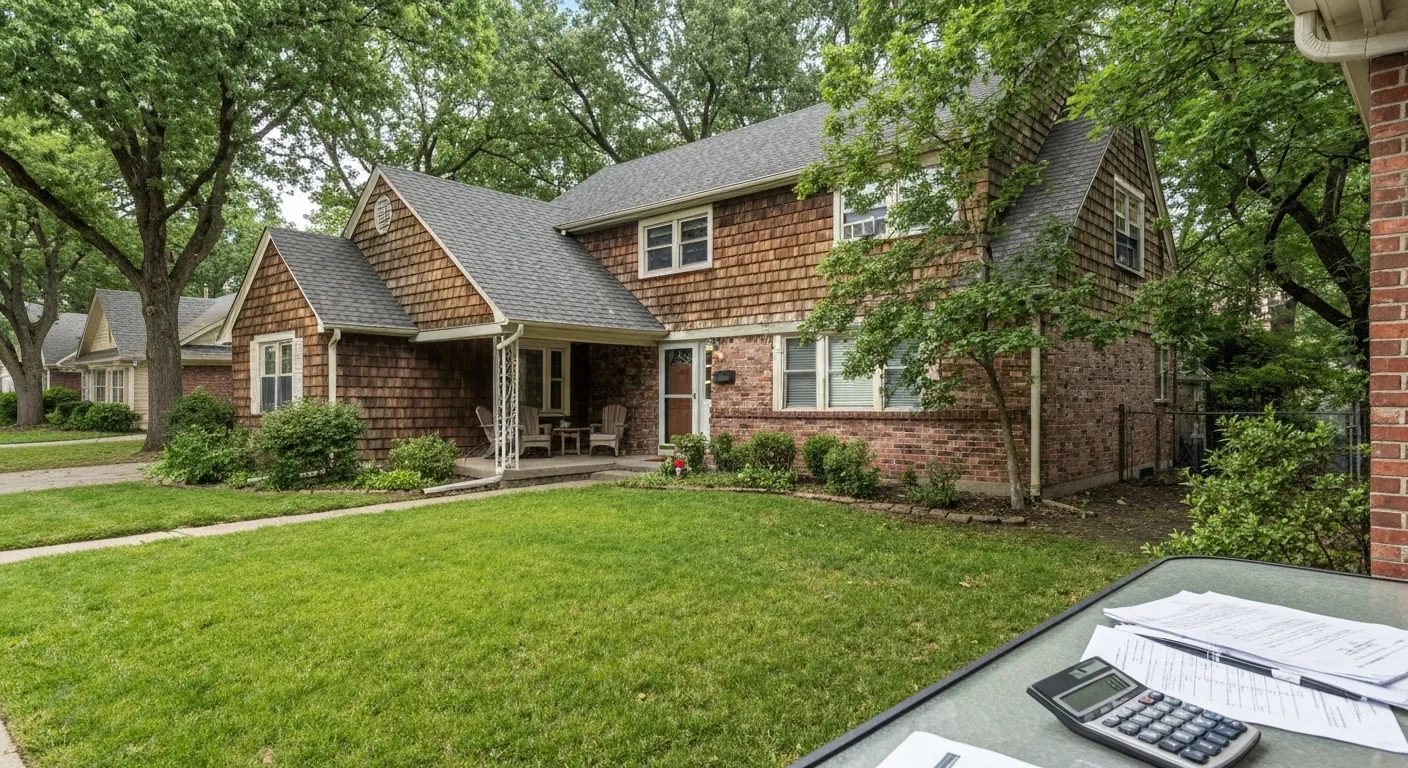
A suburban home exterior with a calculator and documents on a porch table, no.

HELOC / Home Equity

HELOC vs Home Equity Loan in Tennessee (2026) — Which Fits Your Equity Goal

Get pre-qualified~10 minutes · soft credit check to start
  • Direct lender — not a call center
  • NMLS #192103
  • Equal Housing Lender
  • Soft credit check to start
Reviewed by Michael Hernandez, Loan Originator · NMLS #192103, on June 17, 2026
9 min readLast updated June 17, 2026Share

Key takeaways

A home equity loan hands you a one-time lump sum with a fixed payment, so you know the amount and the payoff date the day you sign. A HELOC is a revolving credit line you draw from as you go during a set draw period, usually with a variable payment. In Tennessee, choose the loan for one known cost and the HELOC for staged or unpredictable spending.

  • A home equity loan is a lump sum with a fixed payment and a set payoff date; a HELOC is a reusable credit line you draw against during a draw period, then repay.
  • Both are second liens on your Tennessee home that borrow against the equity you've built — they just suit different spending patterns.
  • HELOCs are typically variable-rate, so the payment can move; a home equity loan locks the payment from day one.
  • Because your home is the collateral on either one, missed payments put the house at risk — match the product to a real plan, not a wish.
  • On a primary residence, federal TILA rules generally give you a 3-business-day right to cancel after a home equity loan or HELOC closes.

HELOC vs. Home Equity Loan — Structural Comparison (Structure Only, No Rates)

HELOC vs. Home Equity Loan — Structural Comparison (Structure Only, No Rates)
FeatureHome equity loanHELOC
How you receive the moneyOne-time lump sum at closingRevolving credit line you draw as needed
Typical rate typeFixedUsually variable
Monthly paymentSame every month for the full termVaries with the balance drawn; often interest-only during the draw period
Interest charged onThe full loan amount from day oneOnly the portion you've actually drawn
Best forA single, known expenseOngoing or unpredictable expenses
Re-borrow without reapplyingNoYes, during the draw period
Lien positionSecond lien on your homeSecond lien on your home
Right to cancel (primary residence)Generally 3 business days after closingGenerally 3 business days after closing

Source: CFPB — Home equity loans and lines of credit

The Core Difference: Lump Sum vs. Revolving Line

The fastest way to tell these two apart is to ask how you want the money handed to you. A home equity loan — sometimes called a second mortgage — pays out as a single lump sum at closing. You know the exact amount, the exact payment, and the exact payoff date the day you sign. Per the Consumer Financial Protection Bureau, a home equity loan usually carries a fixed interest rate that won't change over the life of the loan.

A home equity line of credit (HELOC) behaves more like a credit card secured by your house. The lender approves a credit limit, and during a window called the draw period you borrow only what you need, pay it back, and borrow again. HELOCs are typically variable-rate, so the payment can rise or fall as the index they're tied to moves. Whether the property sits in Davidson, Rutherford, Knox, Hamilton, or Montgomery County, both products are second liens recorded against the same Tennessee home — the only structural difference is how and when you reach the cash.

Neither one is automatically better. The right choice comes down to whether you have one known cost or a series of expenses over time, and how much certainty you want in the monthly payment.

When a Home Equity Loan Tends to Fit

A home equity loan is at its best when you have a single, well-defined expense and you want payment certainty. Because the payment is fixed, you can budget the same number every month for the full term — which matters if a payment that moves would keep you up at night.

In the files I take in across Middle and East Tennessee, the lump-sum structure usually fits these situations:

  • A one-time improvement with a firm contractor bid — a roof, an HVAC replacement, or a kitchen remodel where the quote is already in hand
  • Consolidating higher-interest debt into one predictable payment (a debt strategy, not a guaranteed saving — the math turns on your specific balances and terms)
  • A large one-time cost like a medical bill or a down payment on another property, where you need the full amount up front
  • Anyone who values a fixed payment over flexibility and doesn't expect to re-borrow

When a HELOC Tends to Fit

A HELOC is built for spending that arrives in stages or that you can't fully predict. During the draw period you're typically charged interest only on what you've actually borrowed — not the full limit — and you can pull funds, repay, and pull again as a project unfolds.

The revolving structure tends to earn its keep here:

  • A phased renovation where costs come in waves and you'd rather not borrow (and pay interest on) the whole amount on day one
  • A standby or 'just in case' cushion you may never tap — you owe nothing until you draw
  • Self-employed Tennessee homeowners with uneven cash flow who want a flexible buffer between income cycles
  • Recurring tuition or staged business costs where the total isn't known up front

Equity, Costs, and the Fine Print Tennessee Homeowners Should Know

Both products are secured by your home, which is exactly why they tend to cost less than unsecured borrowing — and exactly why the stakes are higher. If the loan goes unpaid, the lender can foreclose, the same as your first mortgage. That's not a reason to avoid them; it's a reason to borrow against a real plan.

One thing borrowers rarely ask about up front but should: a lender looks at your combined loan-to-value — your first mortgage balance plus the new second lien, measured against the appraised value. You generally can't borrow up to 100% of the value, so the equity cushion you've built is what sets the ceiling on either product. A few more practical points on how these actually close in Tennessee:

  • Expect an application, an income and credit review, and usually an appraisal or property valuation to confirm available equity — your limit and rate depend on credit, equity, and the market, not a headline number
  • HELOCs may carry an annual fee, and some require a minimum draw at closing; home equity loans often have closing costs resembling a small mortgage
  • Tennessee levies no state income tax on wages, but that has no bearing on whether home equity interest is deductible — deductibility is a federal question tied to how you use the funds, so ask a tax professional
  • On a primary residence, federal Truth in Lending rules generally give you a 3-business-day right of rescission (right to cancel) after closing; this cancellation right does not apply to a loan used to buy the home

How to Choose — and How This Compares to a Cash-Out Refinance

Start with the spending pattern. One known cost plus a need for payment certainty points toward a home equity loan. Ongoing, unpredictable costs — or a standby cushion — point toward a HELOC. Then weigh your tolerance for a payment that moves: if a rising payment would strain the budget, the fixed structure of a home equity loan takes that risk off the table.

There's a third path worth knowing. A cash-out refinance replaces your existing first mortgage with a larger one and gives you the difference in cash. That can make sense when you'd also benefit from changing the terms of the first mortgage itself — but it touches your entire loan instead of adding a second lien on top. A home equity loan or HELOC leaves your existing first mortgage exactly where it is, which is often the deciding factor for Tennessee homeowners who are happy with the loan they already have.

None of these is a guaranteed approval. You still qualify on credit, debt-to-income, and available equity. The point is to match the structure to your real need before you start an application — which is exactly what a short pre-qualification conversation is for.


Frequently asked questions

Is a HELOC or a home equity loan better for a Tennessee renovation?

It depends on how the costs arrive. For a single contractor bid with a firm price, a home equity loan's lump sum and fixed payment are usually the cleaner fit. For a phased remodel where costs come in waves, a HELOC lets you draw only what you need as the project moves, so you're not paying interest on money you haven't used yet.

Does a HELOC or home equity loan change my existing first mortgage?

No. Both are second liens recorded behind your current first mortgage, so the terms on your existing loan stay exactly as they are. That's a key reason homeowners who like their current mortgage choose one of these over a cash-out refinance, which replaces the first mortgage entirely.

Can I cancel a home equity loan or HELOC after I sign?

On a primary residence, federal Truth in Lending rules generally give you a 3-business-day right of rescission to cancel after closing. That right does not apply to a loan used to purchase the home. If you cancel within the window, the lender must return any fees you paid.

How much equity do I need to qualify in Tennessee?

There's no single magic number, and approval isn't guaranteed. A lender measures your combined loan-to-value — your first mortgage plus the new second lien against the appraised value — alongside your credit and debt-to-income ratio. You generally can't borrow against all of your value, so the equity cushion you've built sets the ceiling. The fastest way to see where you stand is to get pre-qualified.

Is the interest on a HELOC or home equity loan tax-deductible in Tennessee?

Deductibility is governed by federal tax rules and generally depends on whether you use the funds to buy, build, or substantially improve the home that secures the loan. Tennessee has no state income tax on wages, which doesn't change that federal analysis. Confirm your specific situation with a tax professional.

What happens to a HELOC when the draw period ends?

When the draw period closes, the HELOC enters its repayment period. You can no longer draw new funds, and you repay the outstanding balance — often as principal and interest, which can make the payment jump compared with interest-only draws. Knowing that transition is coming lets you plan the payoff before it arrives.

Related

Keep reading — more on this from Pacific Bay Lending.

Reviewed by Michael Hernandez, Loan Originator · NMLS #192103

Michael Hernandez is a licensed mortgage loan originator with Pacific Bay Lending (Pacific Bay Lending Corp, NMLS #192103), a direct lender serving Tennessee. This guide is general education — not financial advice, a rate offer, or a commitment to lend. Your situation is reviewed individually when you get pre-qualified.

See your real numbers

Get pre-qualified in about 10 minutes — a soft credit check to start, no impact to your score, and no obligation.

Michael Hernandez, Branch Manager · Pacific Bay Lending Corp NMLS #192103 · Equal Housing Lender. Homes shown are public listings for illustration of what's available in this range — not an offer to make a loan on, or sell, a specific property. This is not a commitment to lend; all loans subject to credit approval, program guidelines, and underwriting.

Get pre-qualified →