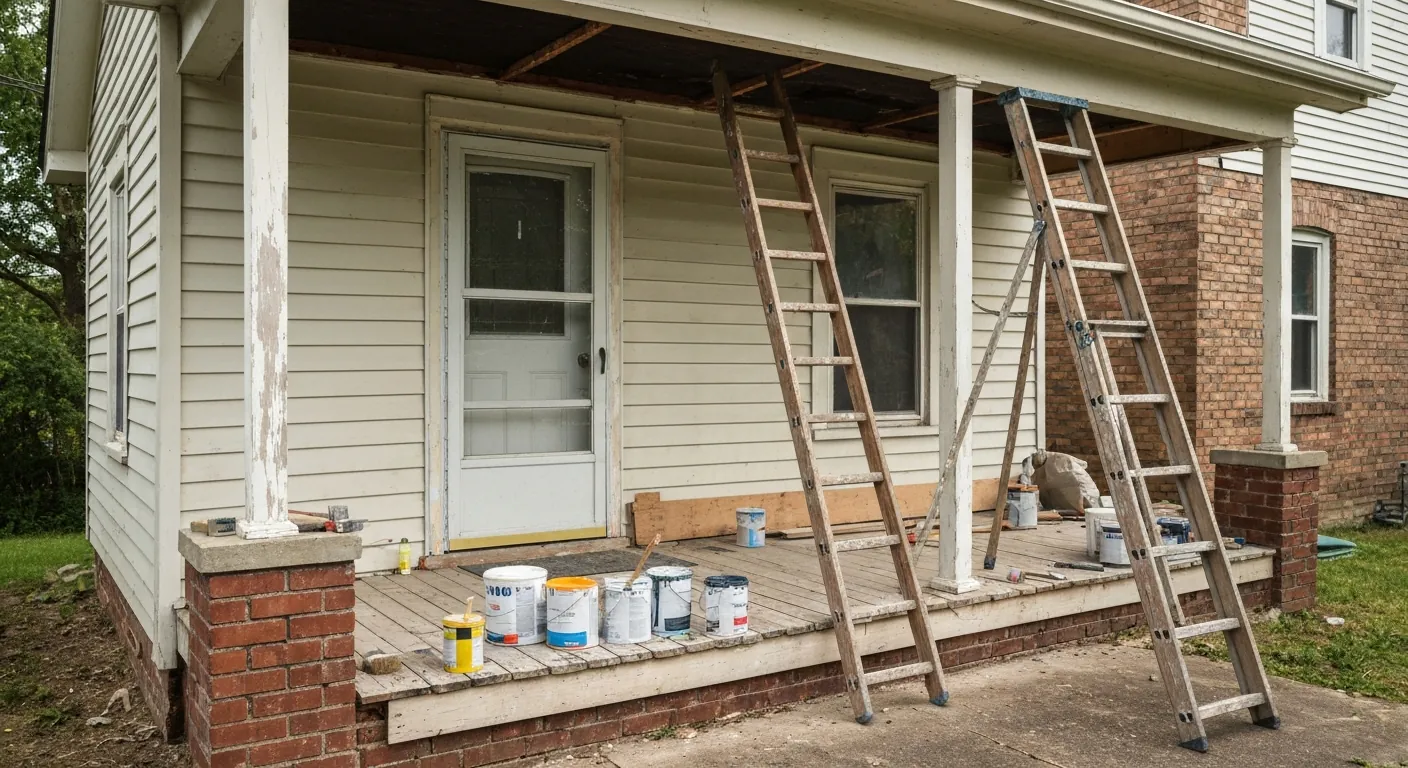
Why a renovation loan costs more to set up
A standard mortgage finances a finished home, so its costs are familiar: lender fees, title, prepaid taxes and insurance. A renovation loan does all of that and manages a construction project on top — which means a handful of extra costs that exist specifically to keep the work on track and protect the money that's funding it. None of them are huge on their own, but they're worth knowing before you budget.
The good news, which surprises a lot of buyers: most of these costs can be financed into the loan rather than paid out of pocket at closing. That's part of the point of a renovation loan — see how much you can borrow for how they fold into the loan amount.
The contingency reserve
This is the cost that most distinguishes a renovation loan. A contingency reserve is a required set-aside — commonly 10% to 20% of the renovation budget — held in case the project turns up something nobody planned for. Open a wall and find old wiring, or pull up a floor and find rot, and the reserve is what covers it without blowing up the loan.
Older homes and projects where the utilities couldn't be fully tested up front tend to require a larger reserve. If you don't end up using it, the unused contingency typically goes toward paying down your loan — so it isn't money lost, it's money held in reserve.
The consultant fee and the draw fees
A Standard FHA 203(k) requires a HUD-approved 203(k) Consultant, and HUD publishes the maximum fee that consultant can charge on a sliding scale by repair size — roughly the range shown in the table. The consultant writes the work write-up, sets the cost estimates, and signs off on each draw.
Because funds are released in draws as work is completed, each draw is inspected and the title re-checked, and there are small fees for both. A HomeStyle loan doesn't require a HUD consultant, but the draw-and-inspect structure — and its fees — still applies.
Putting the numbers in context
To frame the math: across the 16,101 active homes in our Tennessee listings, the median list price is $499,000. On a purchase in that range, a renovation budget might add tens of thousands to the project, and the contingency reserve would be a percentage of that renovation figure — not of the whole purchase. That's why the extra costs, while real, are usually a modest slice of the total loan.
Because the costs scale with the size and complexity of the work, the only way to a real number is to price a specific project. A licensed loan officer can estimate the full cost stack for your scenario when you pre-qualify.
